
Mission Enabler: London Diocese
In the wake of the pandemic, many Anglo-Catholic parishes in Hackney and Islington found themselves facing a stark reality. Congregations had declined, finances were stretched thin, and the daily pressures of keeping a parish afloat left little space for mission. The challenge found their skills mismatched to the demands of post-COVID London.
It was into this context that Toby stepped as a Catholic Mission Enabler on behalf of the Diocese of London. His task was to help parishes move from maintenance to mission, using the richness of the Catholic tradition as a wellspring of creativity rather than a burden of upkeep.
The Opportunity
Hackney and Islington are two of London’s youngest and most deprived boroughs: a third of the population is under nineteen, and they contain the highest number of socially rented households in the UK. The scale of the challenge is daunting. But with a £9.4 million Diocesan Investment Programme grant, the opportunity was also immense.
In Hackney, around 80% of the churches were of an Anglo-Catholic tradition. In neighbouring Islington, there were two or three strategically located Anglo-Catholic churches as well.
The goal of the project was to see a step change within these communities — to encourage congregational growth, strengthen financial stability, and address clergy loneliness through greater collaboration and shared working.
The Mission Enabler’s role was to bring experience in church growth and team development, and to help translate those learnings into the Anglo-Catholic context. That included supporting churches to take new risks, think differently, and apply project management principles — particularly when it came to stewarding large-scale funding.
We recognised that managing significant grants wasn’t a typical clergy skill set. Many were used to overseeing modest congregational giving — perhaps a few thousand pounds a year — not the responsibility of managing a million-pound investment.
We began to develop a playbook — a practical guide to what it looks like to start new worshipping communities within Anglo-Catholic parishes. Along the way, we identified some of the distinct needs and approaches between city-centre Anglo-Catholic churches and neighbourhood Anglo-Catholic churches, particularly in how each engaged with mission and community life.
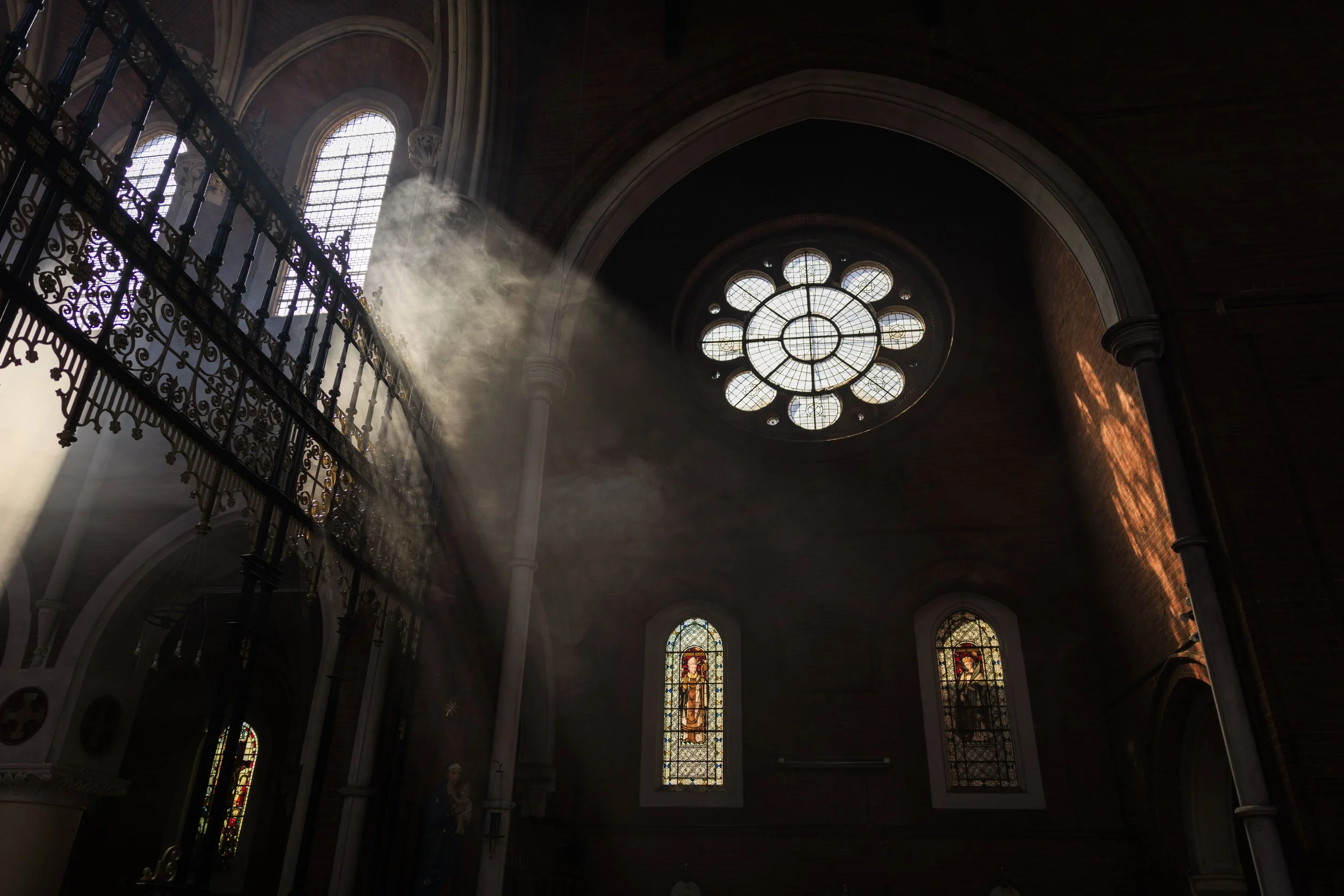
However, above strategy, we were overwhelmed by the hunger in the younger generation for silence, beauty, and mystery. The question pressing on us was simple but profound: if God were to move in these places, would our churches be ready?
The Approach
The work began not with strategies but with relationships—with listening to clergy, understanding their context, and finding ways to give them space and support so that mission could become central again.
Instead of leading their people into prayer, mission and sacrament, priests often felt more like building officers and administrators, overwhelmed by compliance, finance and building upkeep. Many felt isolated and unable to use their gifts to their fullness. Yet at the very same time, there was a stirring—a quiet revival of interest in the Catholic tradition.

-
As someone who’s been in ministry a long time, one of the first things I noticed when stepping into the parishes was that many people were working incredibly hard — but not necessarily smart.
A lot of systems were still entirely paper-based, simply because that’s how things had always been done. Some churches were still managing bookings with a paper calendar kept on-site, or collecting community data with no awareness of GDPR (UK data privacy law) compliance. Many had never developed or implemented a GDPR policy at all.
This quickly became one of the project’s key learning points. We realised that beyond theology or tradition, there were basic operational practices — things like data management, digital systems, and financial processes — that needed updating to make mission sustainable.
We began introducing best practices drawn from larger, well-run churches in the area, finding cost-effective ways to adapt them for Anglo-Catholic contexts. Where possible, we created shared administrative or coordination roles across parishes, building economies of scale and ensuring clergy had the right support.
This work led us to define an important concept: mission readiness.
We discovered that many parishes simply weren’t ready to engage in new mission initiatives because their operating systems were holding them back. Some were still paying staff by cheque, which meant even small grants or new hires created unnecessary friction.
We realised the first 12–18 months of the project would need to focus on laying the foundations for mission readiness— putting the right systems, policies, and training in place so that new initiatives could launch from a position of strength, not strain.
To do this, we brought in both external operational specialists and internal ministry consultants, so that clergy could start new projects from a place of best practice rather than learning through avoidable mistakes.
-
Across the Church of England, a wider challenge was becoming clear: within ten years, most clergy were approaching retirement, and around half of all churches were projected to be without a priest. The ordination pipeline simply wasn’t keeping pace with the need.
At the same time, there was a growing digital and generational gap within ministry. Younger clergy — digital natives fluent in social media and design — were few in number and often lacked mentoring relationships with older clergy who hadn’t grown up in a digital world.
This created a striking contrast. Churches that understood how to harness digital communication — who could design a poster, run a social media campaign, or tell their story well — were reaching people effectively. But for many others, even basic communication felt overwhelming. They might have been running excellent community projects or beautiful worship, yet no one outside the building knew.
So part of the project became an act of re-covenanting churches with their communities through communication — helping them speak again in a way their neighbours could understand.
Sometimes that looked as simple as creating printed flyers or term cards for areas where digital reach was limited. In other places, it meant teaching clergy and volunteers how to make digital flyers, use Instagram, run newsletters, and share updates through local community forums.
We began running small experiments to test what worked and what didn’t in each parish. Once we identified effective approaches, we invested in what worked — whether that was local posters or digital campaigns.
At Holy Redeemer, for example, the combination of posters and consistent social media made a visible difference. The church now has someone dedicated to managing social media weekly — and their most recent Sunday service had 46 people attending, double what it had been before launching it’s social media.
It’s a simple but profound reminder: when a church learns to tell its story well, growth follows.
-
Through the process of listening, we began to identify the absent skillsets within many parishes. Even when funding was available, it was often difficult to translate money into effective roles. So we started asking: what new kinds of roles could serve across multiple parishes — roles that would genuinely resource mission rather than just maintain operations?
We realised what we needed were people who could execute well, who had experience in mission, and who were comfortable sharing their faith — but also able to work within the Anglo-Catholic tradition. The challenge was that these kinds of high-capacity leaders often found it difficult to flourish under less experienced clergy leadership.
To address this, we created an out-of-parish “Missioners Team” — a group of practitioners who shared a common culture, received regular coaching, and were supported to work sideways and upwards within parish systems. Their work was guided by the project’s overarching vision and values, ensuring that even when local leadership capacity was limited, there was still strategic alignment and accountability for mission activity.
Much of this started with careful listening — entering each parish to understand where the low-hanging fruit might be. In South Hackney, for example, we identified three parishes with a high density of young families, excellent relationships with local church schools, but very little connection between school life and Sunday worship.
By linking those three parishes together, we’ve since established five new worshipping communities, three of them focused on children and young people. We’ve also deepened our engagement with schools, and are beginning to see tangible growth among families and youth.
This work is being led by Lisa, a children’s minister with experience in high-capacity, multi-parish contexts. She’s now bringing that apostolic leadership into a smaller setting, helping to pioneer new communities and mentor emerging leaders.
Our next step was to resource Lisa with part-time support roles, enabling her to work more strategically across all three parishes. The aim is for leadership around children and families to be held by someone with the time and expertise to think apostolically — rather than it resting solely with senior clergy who are already stretched thin.
Importantly, no single parish could have afforded a “Lisa” on their own. The project is currently underwriting her role, but by aligning with diocesan trainee and apprenticeship funding, the long-term vision is that these parishes will sustain the work collaboratively.
That’s the strategic heart of this approach: to start initiatives that can eventually sustain themselves, moving from dependency to shared ownership — and, in time, to stories of genuine renewal.
-
Within several of the key parishes, one of the biggest shifts came through hands-on leadership modelling.
Part of my role involved working one-to-one with clergy, helping them clarify their priorities, strengthen their leadership approach, and build healthier rhythms of accountability and teamwork.
In at least three parishes, I took on an executive-style role — chairing or co-chairing weekly staff meetings. The aim was to model how effective team leadership functions: setting clear missional priorities, distributing responsibility well, and cultivating collaboration rather than operating in isolation.
These meetings, usually an hour to ninety minutes each week, became spaces to rebuild culture around mission rather than maintenance — helping teams focus their energy on people and purpose instead of just operations.
In one parish, we identified that while outcomes were strong, coordination was poor. Together, we created a two-day-a-week coordinator role to streamline communication and execution across all ministries. That single role dramatically improved the parish’s ability to deliver on its goals.
Alongside this local work, we also ran a “Come and See” initiative. Every three months, we would visit parishes that were demonstrating best practice in areas like collaboration, communication, and mission strategy. This allowed clergy and teams not only to learn directly from their peers, but also to form ongoing mentoring relationships with those who were modelling healthy parish culture.
In essence, this phase of the work combined individual coaching, team leadership modelling, and collective learning experiences — all designed to grow a culture of shared accountability, confidence, and collaboration across the Anglo-Catholic network.
Outcomes and Impact
-
![]()
The Most Holy Redeemer, Clerkenwell
What began as a fragile experiment with lanterns and music became a seedbed for renewal.
-
![]()
St Thomas, Upper Clapton
Catholic renewal that is both ancient and experimental, contemplative and missional, rooted and adventurous.
-
![]()
The Catholic Mission Covenant
Out of a desire to replace isolation with fellowship, the Catholic Mission Covenant was formed—a partnership of fifteen Anglo-Catholic parishes across Hackney and Islington.
-
![]()
Reclaiming Communication and Visual Identity
Across the project, we saw just how transformative the branding and communication work became. It revealed both the scale of the challenge and the depth of opportunity.



If you’re shaping the future of a church or movement and need a trusted partner to help you reimagine what’s possible and bring it to life, let’s start a conversation.